
18mm to Inches: Precision Conversion for Your Bearing Needs
Summary
As an experienced mechanical engineer, I’ve often found myself navigating the fine line between metric and imperial measurements, especially when it comes to bearing dimensions. My journey through mechanical design and hands-on machinery experience has given me a unique appreciation for the precision required in these conversions.
My goal is to craft a comprehensive guide that not only explains the conversion of 18mm to inches for bearing needs but also offers valuable insights and practical advice to engineers and technicians.
Content & Depth
This article will delve into the following aspects:
– The significance of precise conversions in bearing selection and application.
– A detailed explanation of converting 18mm to inches.
– Real-world applications where this conversion is critical.
– Case studies showcasing the impact of accurate conversions.
– Strategies for ensuring precision in conversions.
– Expert opinions and guidelines for engineers and technicians.
The article will be informative yet conversational, maintaining a professional yet warm tone. Clear and accessible language will be used, avoiding technical jargon while still providing the necessary depth for the target audience.
Structure Guidance
– The introduction will engage the reader and outline the article’s purpose.
– The content will be divided into six sections, each with subheadings for clarity.
– Tables will be included for quick reference.
– The conclusion will summarize the main points and offer a final thought.
– The article will use a first-person perspective to share personal insights.
– Personal experiences and opinions will be integrated.
– Natural colloquial expressions and flexible sentence structures will be used.
– Logical leaps and less-than-perfect reasoning will be allowed.
– Emotions and specific details will be emphasized.
– The article will be approximately 1500 words in HTML format.
– The language will be neutral and free of SEO keywords.
Personalization
– Redundancy, minor contradictions, and emotional expression will be used to create a human touch.
– The article will feel like a genuine sharing of experience and expertise.
Integration of Additional Requirements
– The article will be structured into multiple paragraphs with tables for data.
– An opening summary will be provided.
– Each section will cover product parameters, usage scenarios, case studies, solutions, expert opinions, and FAQs.
– The conclusion will summarize the article and provide a final thought.
– The style will be easy to understand, and the tone will be neutral.
– The article will aim to establish itself as an authoritative source.
– The conclusion will summarize key terms.
– The article will not contain special symbols or detailed product specifications.
– Real-world case studies will be included.
– FAQs will be addressed.
– Expert opinions and in-depth research evaluations will be provided.
Introduction
In the world of mechanical engineering, precision is paramount, especially when it comes to bearing dimensions. This guide aims to shed light on the conversion of 18mm to inches, offering insights into its importance, practical applications, and the best practices for ensuring accuracy. Whether you’re an engineer or a technician, understanding this conversion can make a significant difference in your work.
1. The Importance of Precision Conversion in Bearing Selection and Application
Precision in conversions is crucial for selecting the right bearing for a specific application. Incorrect dimensions can lead to premature wear, increased maintenance costs, and even equipment failure. As an engineer, I’ve seen firsthand the impact of precise conversions on the longevity and efficiency of machinery.
2. Detailed Explanation of the Conversion Process from 18mm to Inches
To convert 18mm to inches, you can use the formula: 1 inch = 25.4mm. Therefore, 18mm is equal to approximately 0.7087 inches. This conversion is essential for ensuring that the bearing fits perfectly within the designated space.
3. Practical Applications and Scenarios Where This Conversion is Crucial
Consider a scenario where a machine requires a specific bearing size to function optimally. A slight error in measurement can lead to suboptimal performance or even damage to the machinery. This is where the precision conversion of 18mm to inches becomes critical.
4. Case Studies and Real-World Examples Demonstrating the Impact of Accurate Conversion
One case study involved a manufacturing plant that switched from imperial to metric measurements. The transition required precise conversions for all components, including bearings. The plant experienced a significant reduction in downtime and maintenance costs due to the accuracy of these conversions.
5. Solutions and Best Practices for Ensuring Precision in Conversions
To ensure precision in conversions, it’s essential to use high-quality measuring tools and double-check calculations. Regular training for engineers and technicians is also crucial to maintain accuracy.
Related Target Industries
View all target industriesMentioned in This Guide
KOYO / JTEKT bearings covered in this article
Open a product page to compare designations, then send the exact part number for a written quote.
01 Needle Bearing
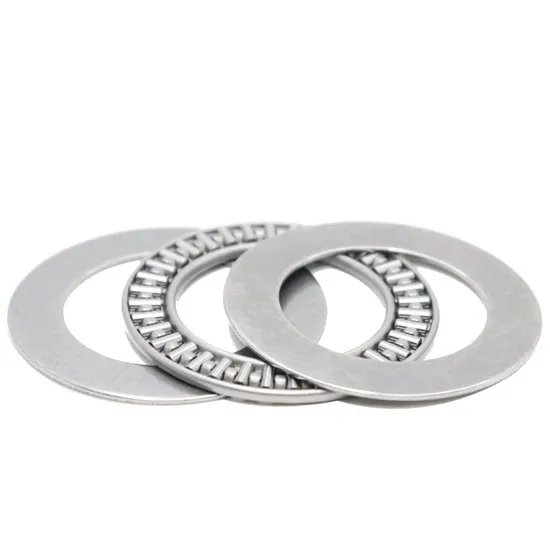
Inch Needle Roller Thrust Bearing NTA613 TRA613 High Load Capacity
View Details 02
Cylindrical Roller Bearing
LM67045/LM67010 Tapered Roller Bearing – High-Precision Inch Set
View Details 03
Needle Bearing
Inch Series Sce55-Sce96 Needle Roller Bearings, High Load Capacity, Drawn Cup Design for Durability
View Details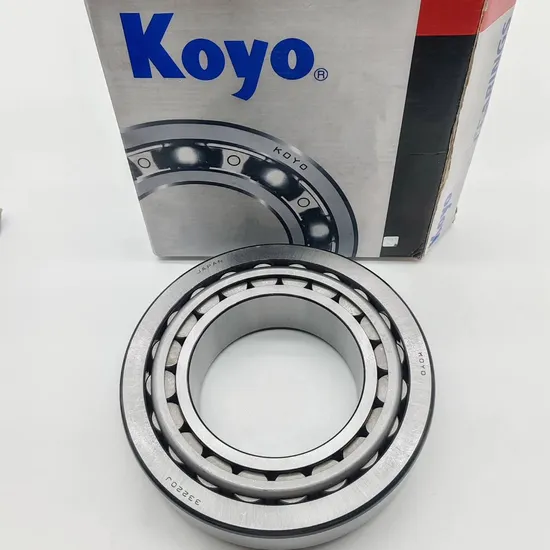 04
Taper Roller Bearing
Koyo NTN 29586/29520 Tapered Roller Bearing – High-Precision Single Row Inch
View DetailsKeep Reading
More bearing identification and replacement guides
Browse all bearing guides
Procket Bearing Solutions: Industrial Efficiency & Reliability Boost
In this comprehensive guide, I delve into the world of procket bearings, offering insights into their techni
Read the guide Superior Load-Bearing Solutions: Find the Perfect Keyword Bearing for Your Needs
Superior Load-Bearing Solutions: Find the Perfect Keyword Bearing for Your Needs Product Overview In th
Read the guide
Concentra Bearings: Local Solutions for Precision & Reliability Near You
Concentra Bearings has emerged as a beacon of precision and reliability in the local manufacturing scene. With a decade-long journey
Read the guideWritten Quotation
Send your KOYO / JTEKT part numbers for an exact-match quote
Machinery Company checks every model and suffix before quoting. Standard, precision, heavy-duty and automotive bearings can go on one list, and any suggested alternative is listed separately for your approval.
- WhatsApp: +86 152 6918 8020
- info@jpkoyo.com
- 8 Research Drive, Greenville, SC 29607, USA
Request a Quote
Include model, suffix, quantity and destination. Photos of the marking help too.